Employee Surveillance vs Monitoring: Finding the Right Balance
Adam Brooks
Aug 25, 2025
Introduction
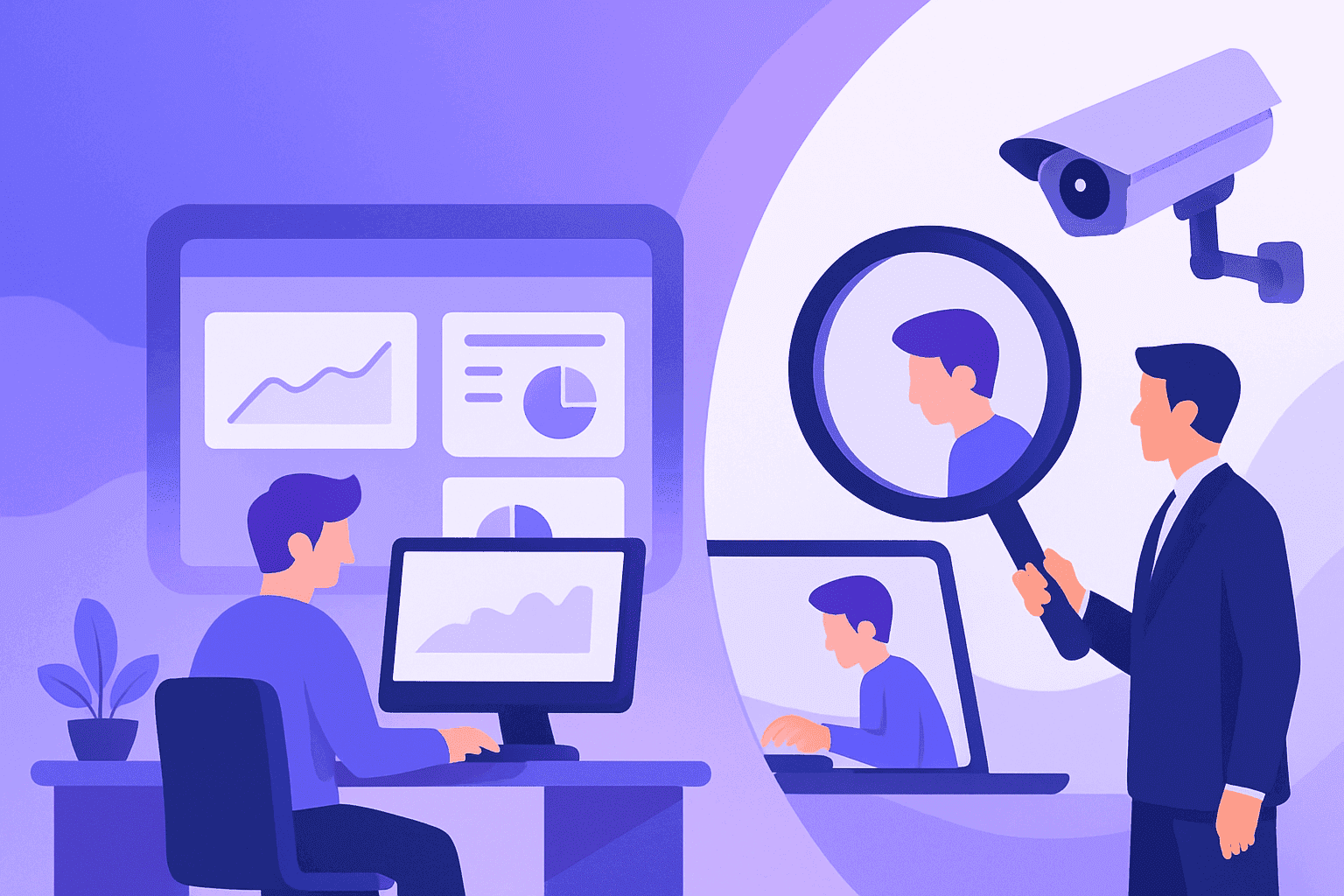
In today’s hybrid and distributed work environment, leaders face a tough balancing act: how to measure team performance without turning oversight into a culture of mistrust. That’s why the debate between surveillance and monitoring has never been more important. While employee surveillance often conjures images of hidden keystroke logs and constant screen captures, monitoring signals a more transparent, outcome-based approach to workforce insight.
In this article, we’ll explain what sets these approaches apart, how each impacts productivity and culture, the legal and ethical guardrails to consider, and a practical roadmap for implementing monitoring (not surveillance) in your organization. Whether you lead a startup or a global team, these best practices will help you build productivity without sacrificing trust.
Understanding Surveillance vs Monitoring in the Workplace
Defining both terms
Employee surveillance describes practices where organizations track, often covertly, detailed individual behaviors — keystrokes, screenshots, GPS location, even biometric data. By contrast, employee monitoring typically collects aggregate metrics — time spent, tasks completed, and productivity trends — done transparently and with team awareness.
Why the distinction matters for leaders
For leaders and HR professionals, the difference is more than semantics — it’s about culture, trust, and productivity. When employees feel watched, they may slip into “look-busy” mode or disengage, which can harm well-being and output. Transparent monitoring that tracks outcomes and preserves autonomy is more likely to drive engagement and real results.
The spectrum of approaches
Think of a continuum: at one end is micromanagement-style surveillance (invasive, real-time, granular); at the other is strategic monitoring (outcome-driven, transparent, supportive). Many companies drift toward the invasive end — recognize where you currently sit before choosing new tools or policies.
Impact on Productivity, Culture & Performance

The data behind outcomes
Heavy surveillance doesn’t necessarily boost productivity. Evidence links increased strain and reduced autonomy — hallmarks of intense surveillance — to diminished well-being and lower performance. Teams using transparent dashboards often report higher engagement and fewer “task-masking” behaviors (the appearance of work without real results). In fact, one survey by WorldatWork found that companies adopting outcome-based monitoring saw up to 20% faster project delivery compared to those relying on invasive tracking methods.
The culture cost of surveillance
When employees feel tracked rather than trusted, morale and retention can suffer, and innovation slows. Government and industry analyses warn that workplace surveillance may harm more than productivity. A simple leadership test: if your monitoring process wouldn’t survive a public disclosure to your employees, it’s probably veering into surveillance territory. Sustainable performance requires openness, not secrecy.
Productivity monitoring done smart
Focus on what gets done (deliverables, value) instead of how many keystrokes were logged. A useful addition: measure a collaboration ratio — hours spent in productive peer interaction — to move beyond narrow individual metrics. Teams that review performance collaboratively tend to self-correct faster and stay more aligned on priorities.
Legal, Ethical & Cultural Considerations for Leaders
Legal frameworks and obligations
No matter your region, transparency, consent, and data minimization matter. In the EU/UK, GDPR emphasizes disclosure, purpose limitation, and proportionality; U.S. best practice still recommends clear policy disclosure. Even when laws are looser, ethical expectations from employees are tightening — especially among younger workers who value autonomy and privacy.
Ethical practice and trust building
Ethics demand clarity on why you monitor, what you collect, who sees it, and how it’s used. Adopt “monitoring with a growth mindset” — use data to support development rather than discipline. Share anonymized trends rather than individual stats to foster psychological safety.
Embedding the right culture
Link monitoring metrics to team rituals: quarterly “team insight” sessions where data is reviewed together and improvements are co-designed. This reinforces fairness, inclusivity, and buy-in.
Implementing Monitoring, Not Surveillance: A Practical Roadmap

Step 1 – Define Outcomes & KPIs
Start with measurable business-impact KPIs: tasks completed, project milestones, time to resolution, client satisfaction — not just hours logged. The goal is to align productivity measurement with business value.
Step 2 – Select Non-Invasive Tools
Choose productivity monitoring tools (time-tracking dashboards, app-usage summaries) that avoid constant keystroke logging or hidden screen captures. Favor tools that provide analytics in aggregate, not intrusive personal data.
Step 3 – Communicate & Co-Design with Your Team
Explain why you’re tracking, what data is collected, who can access it, and how it will be used. Invite employees to help refine the metrics — they often know where inefficiencies truly exist.
Step 4 – Use Data for Coaching & Improvement
Make the data a support tool — identify bottlenecks, share best practices, reward outcomes. A coaching-driven model transforms monitoring from a compliance task into a growth engine.
Step 5 – Review, Iterate & Measure Culture
Track engagement, turnover, quality, and signs of “productivity theater.” If anxiety rises or output quality falls, recalibrate. Regular pulse surveys help ensure that your monitoring remains empowering, not oppressive.
Quick Takeaways
Surveillance (hidden tracking, keystrokes, screenshots) and monitoring (outcome-based, transparent) have very different cultural effects.
Heavy surveillance can damage trust and reduce engagement — often hurting productivity.
Transparent monitoring aligned to business outcomes preserves trust and boosts performance.
Legal/ethical basics: disclose, limit data, define purpose, protect privacy.
Make monitoring collaborative and growth-oriented, not punitive.
Non-invasive tools help managers gain insights while respecting employee autonomy.
Conclusion
Choosing between surveillance and monitoring is a leadership decision. Prioritize transparency, outcome-based metrics, non-invasive tools, and a coaching mindset to build trust and productivity. The right monitoring approach turns data into dialogue — not discipline.




Try OrbityTrack for 7 Days!
Boost Productivity.
Turn data into results.
Gain full visibility over your team.
Start Your Free Trial