Monitor Remote Work: Smarter Ways to Track Productivity
Lauren Mitchell
Sep 1, 2025

Introduction
Managing a remote team brings exciting opportunities — and real challenges. One of the biggest is how to monitor remote work in a way that truly drives productivity without undermining trust or turning oversight into micromanagement. For business owners, team leaders, HR and operations managers — and anyone focused on productivity optimization — striking that balance means using the right metrics, tools, and cultural practices.
This article explores how to define productivity for remote work, set up meaningful monitoring systems (not invasive surveillance), use data effectively, build a culture of trust, and continuously refine your approach.
Why Monitoring Remote Work Needs a New Approach
In the traditional office era, you could walk by someone’s desk and get a sense of their workflow. That doesn’t work in a distributed environment. Trying to apply the same oversight model remotely often leads to oversurveillance, which damages morale and reduces genuine productivity.
The key is to monitor remote work by focusing on meaningful indicators — like tasks completed, milestones achieved, communication flow, and time-to-value — rather than every keystroke or idle minute. Studies show that combining activity data with goal progress provides useful insight without crossing the line into micromanagement.
For remote teams, it’s helpful to establish a “compass metric” — for example, average tasks completed per sprint — rather than a “location metric” such as hours logged. This approach keeps attention on outcomes rather than visibility.
When designing a monitoring system, ask: What value did the team deliver this week? — not How many hours did they log? That shift in mindset transforms monitoring from control to empowerment.
Practical Tools & Metrics for Monitoring Remote Worker Productivity
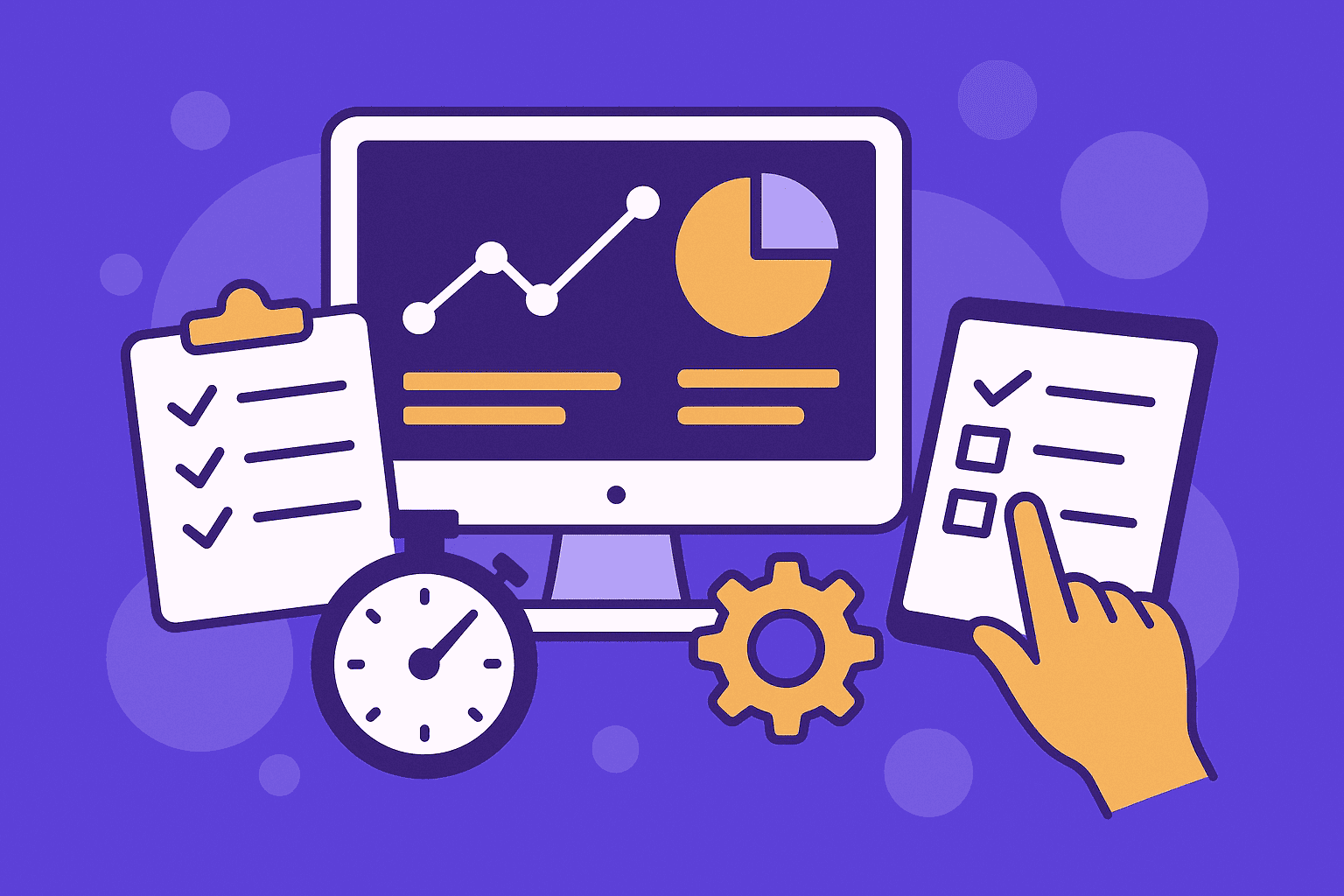
The tools and metrics you use to monitor remote work are crucial — but how you apply them matters even more. Start by choosing solutions that support automatic time tracking, task management, and productivity analytics dashboards. Reviews consistently highlight these as essential for successful remote workforce management.
Key metrics to consider:
Tasks completed per week (or per sprint)
Time spent on high-value vs. routine tasks
Communication response times
Bottleneck identification (tasks that consistently stall)
Active vs. idle time patterns — used as indicators, not judgments
A remote-first marketing firm adopted a dashboard that tracked “tasks completed” and “average time to complete” instead of hours logged. Within three months, median completion time dropped by 18%, reflecting a more results-driven culture.
To implement effectively:
Use a tool or platform module that captures these key metrics.
Communicate clearly to your team that tracking aims to support productivity, not monitor behavior.
Use dashboards to identify outliers, then coach rather than penalize.
Combining time, task, and communication data — a process known as triangulation — gives a fuller picture of team performance. Time data alone can be misleading, but when paired with project and communication trends, it becomes a powerful productivity insight tool.
Building a Trust-Based Remote Monitoring Culture
Monitoring only succeeds when your team trusts it. Studies show that while many managers believe monitoring supports well-being, only a small percentage of employees agree.
To build trust:
Be transparent about what you’re tracking, why, and how the insights will be used.
Involve employees in defining KPIs and setting standards for productivity tracking.
Focus on coaching instead of policing. Ask, “What can we adjust to improve your flow?” rather than “Why were you idle?”
Respect boundaries. Avoid invasive features like constant screenshots or keystroke logs unless absolutely necessary.
Regularly review metrics with your team and invite feedback.
One remote company implemented a simple “monitoring charter” — a short agreement outlining what data is collected and how it’s used to improve processes, not penalize people. This helped reinforce transparency and trust while encouraging collaboration around shared goals.
Review & Refine Your Remote Monitoring Strategy

Monitoring remote work is not a “set and forget” process — it evolves as your team and workflows do. High-performing companies regularly review and adjust their monitoring strategies to stay aligned with business outcomes.
Steps to improve continuously:
Quarterly review: Analyze productivity metrics, engagement surveys, and turnover data. Look for signs of “productivity theater” — work that looks busy but adds little value.
Tool audit: Ensure your monitoring tools still align with company values and deliver outcome-focused data.
Culture check: Ask employees how they feel about monitoring through quick pulse surveys.
Adjust metrics: If “tasks completed” feels too broad, consider metrics like “tasks per category” or “blocker removal time.”
Stay adaptable: As remote and hybrid work evolve, your metrics must evolve too.
After transitioning to hybrid work, a software company discovered that tracking “hours logged” no longer reflected performance accurately. They shifted to outcome-based metrics like “features delivered per sprint” and “customer tickets closed per week.” This approach aligned measurement with real results and improved transparency across teams.
Include a “monitoring sunset clause” in your policy — commit to reviewing each metric’s relevance every six months. Retire any that no longer add value. This keeps your system lean, relevant, and fair.
Quick Takeaways
Effective monitoring focuses on outcomes, not hours.
Combine time, task, and communication data for richer insights.
Build trust and transparency into your monitoring strategy.
Regularly review and update your metrics and tools.
Involve your team — collaboration creates accountability and success.
Conclusion
Tracking remote team productivity is essential — but how you do it makes all the difference. By focusing on outcomes over hours, using balanced metrics, and fostering a culture of trust and collaboration, your organization can monitor remote work in a way that truly drives performance, engagement, and long-term growth.




Try OrbityTrack for 7 Days!
Boost Productivity.
Turn data into results.
Gain full visibility over your team.
Start Your Free Trial