Employee Monitoring Statistics: What Leaders Need to Know
Adam Brooks
Dec 10, 2025

Introduction
As teams increasingly operate remotely or in hybrid models, employee monitoring statistics reveal not only how many organizations track performance — but also how these practices influence trust, culture, and outcomes. This is especially relevant for business owners, team leaders, HR and operations managers focused on productivity optimization. This article dives into key data points, explores their implications, and outlines how to interpret monitoring statistics in a way that supports rather than undermines your workforce.
Prevalence: How Common Is Monitoring in Modern Workplaces?
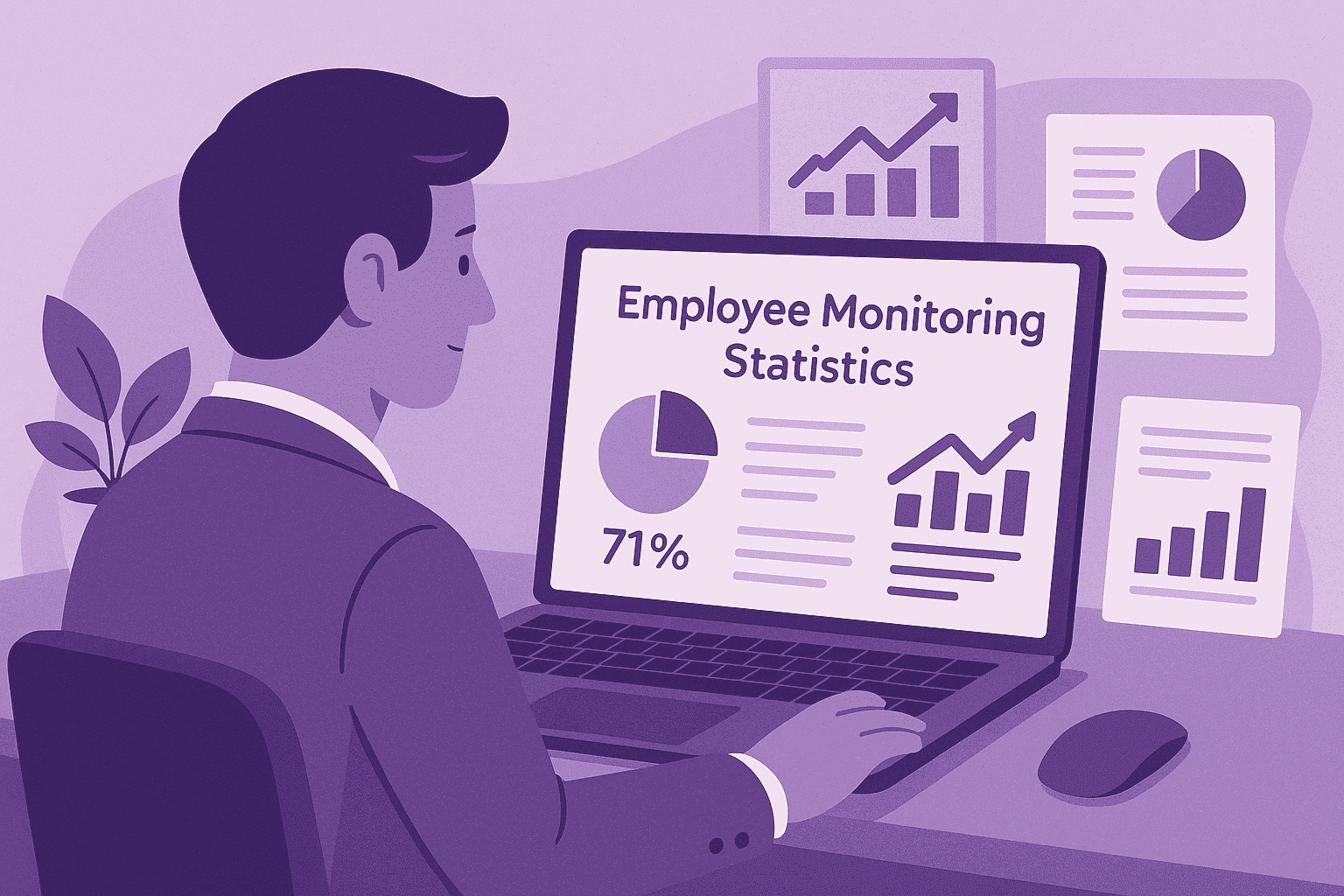
Quantitative data shows that monitoring is far from rare — it’s rapidly becoming standard practice. For example, one report found that approximately 71% of employees are subject to some form of digital monitoring, representing a 30% increase year-over-year.
In a separate survey, 43% of workers reported their employer actively monitors online activity such as websites visited or chats used.
Another figure: around 67.6% of large North American employers use at least one form of employee monitoring software.
These numbers illustrate that monitoring is no longer niche — it’s embedded across workplaces. For leaders, this underscores the need to move beyond “Are we monitoring?” to how and why monitoring is being used.
Employee Perceptions & Effects on Culture

Monitoring practices reveal significant cultural impacts. Studies show that around 56% of employees who are monitored report increased stress or anxiety compared to those not tracked.
The same research found that monitoring can reduce job satisfaction, with many workers feeling less autonomous and more under constant scrutiny.
One survey documented that 39% of monitored employees said monitoring negatively affected their relationship with their employer.
The challenge for leaders: even if monitoring is widespread, its effect on culture and morale can be counterproductive unless carefully managed.
Productivity & Performance: What the Data Shows
Many employers implement monitoring aiming to boost output. A report cited that 73% of managers store messages, emails or calls to evaluate performance.
However, the data presents a mixed picture. For instance, one analysis found that while 97% of remote employers believed monitoring increased productivity, a majority of employees disagreed.
Another research highlighted that in the U.S. and U.K., only 9% of workers said surveillance improved their productivity, while 19% reported productivity suffered.
These patterns suggest: monitoring alone doesn’t guarantee performance gains. Instead, its value depends on how it’s applied, communicated, and integrated into trust-based workplace culture.
Best Practices: Interpreting and Leveraging Monitoring Statistics
Choose Metrics That Reflect Value
Instead of prioritizing hours logged or keystrokes, focus on outcome-oriented metrics like task completion, quality of output or cycle time. Monitoring statistics drive value when aligned with business goals.
Share Data & Maintain Transparency
Many employees are unaware of what is monitored or why. One study revealed that only about 47% of workers believed their employer fully disclosed how monitoring tools were used. Open discussions about why you monitor, what data is collected, and how it supports the team enhances alignment and trust.
Review Impact Regularly
Monitoring statistics should inform reflection: Are metrics improving? Are employees feeling supported or surveilled? One meta-analysis found that persistent monitoring contributes to increased stress and reduced well-being.
Regular reviews allow organizations to adjust tools, policies, and supports based on data and feedback.
Balance Oversight with Empowerment
When monitoring becomes heavy-handed, companies risk eroding engagement and increasing turnover. Research found that companies using high-intensity monitoring sometimes experienced “productivity theatre” where employees appear busy rather than producing value.
To avoid that, involve teams in defining what gets monitored, why it matters, and how it supports—not punishes — their performance.
Quick Takeaways
Monitoring is widespread: 60%–70%+ of organizations now use employee-tracking tools.
Many employees experience negative side effects such as stress and lower morale when monitoring lacks clarity.
Productivity gains from monitoring are not automatic — they depend on alignment with culture and outcomes.
Transparent communication, purposeful metrics and regular review maximize the value of monitoring data.
Oversight without empowerment risks damaging trust and reducing engagement.
Conclusion
Employee monitoring statistics offer a valuable lens into how work is managed — but they don’t determine how it should be managed. For leaders focused on productivity optimization, the priority is to interpret these numbers thoughtfully: align monitoring with purpose, protect culture, and ensure monitoring supports trust rather than undermining it. When done well, monitoring becomes a tool for insight, not intuition — and helps build performance that’s rooted in both clarity and respect.




Try OrbityTrack for 7 Days!
Boost Productivity.
Turn data into results.
Gain full visibility over your team.
Start Your Free Trial